The Monty Hall Problem: Understanding Probability and Decision Making
Team Members: Justin Chae, Timothy Hoang, Thanh Trinh, Vicky Huang
Introduction to Monty Hall Problem
What is the Monty Hall problem? It is a game from an American television game show called Let's Make a Deal and it is named after the host: Monty Hall.
The game is played as follows: the contestant is presented with three doors. Behind one of the doors is a car, and behind the other two doors are goats.
The contestant picks a door, and then the host opens one of the other two doors to reveal a goat. The contestant can now choose to either stay with theoretical
original choice or switch to the other unopened door.
Is there a way to constistently win the game?
It may not seem like. After the host removes a door, it's just a 50/50 chance, right? However, based on conditional probability, we will find that it is always
better to switch the door you choose. The probability of winning the car if you switch is 2/3, while the probability of winning the car if you stay is 1/3. Try the
switch strategy and the stay strategy below to see the results for yourself!
Monty Hall Simulation
Door #1
Door #2
Door #3
Now let's try to simulate many games to see if we can empirically show that switching doors is the better strategy. Click the buttons below to run
the game 10, 100, or 1000 times. The graph will show the number of wins of the switch strategy, the stay strategy, and a random strategy.
The switch strategy is much better! The graph shows that the probability of winning with the switch strategy is about 2/3, while the probability of winning
with the stay strategy is about 1/3.
Why is it better to switch?
It seems very unintuitive that switching doors could lead to such an advantage over staying with your original choice. However, the key to understanding why
there is a new advantage is to understand what the host's role in the game plays. The host cannot remove a car from the game. This means that you have new
information about the last two doors available to you. Try playing as the host instead below and see if you can formulate why the probability of winning
goes up when you switch doors.
Monty Hall Simulation (As the host!)
The contestant's initial selection has been made randomly.
All door prizes are revealed. As the host, click on a door to remove it from play.
Door #1
Door #2
Door #3
Contestant's initial door has been selected. Choose a door to remove from the game!
Now let's formalize the intuition for what is actually happening when you switch doors. You might have noticed from the original game and the host game above
that usually you will choose wrong the first time. Why? Well, two of the doors are goats and one door is the car so the probability you choose correct the first
time is 1/3 while choosing incorrect is 2/3. So on average, your first choice will be incorect. So what happens after you choose incorrectly. The host is forced
to reveal a goat, guaranteeing that the other door is the car. Thus, since you will usually choose incorrectly on your first choice, the host will be forced to
reveal the only other goat, giving you the car if you switch. This is why you will usually win when you switch doors. For the specific probabilities, consult the
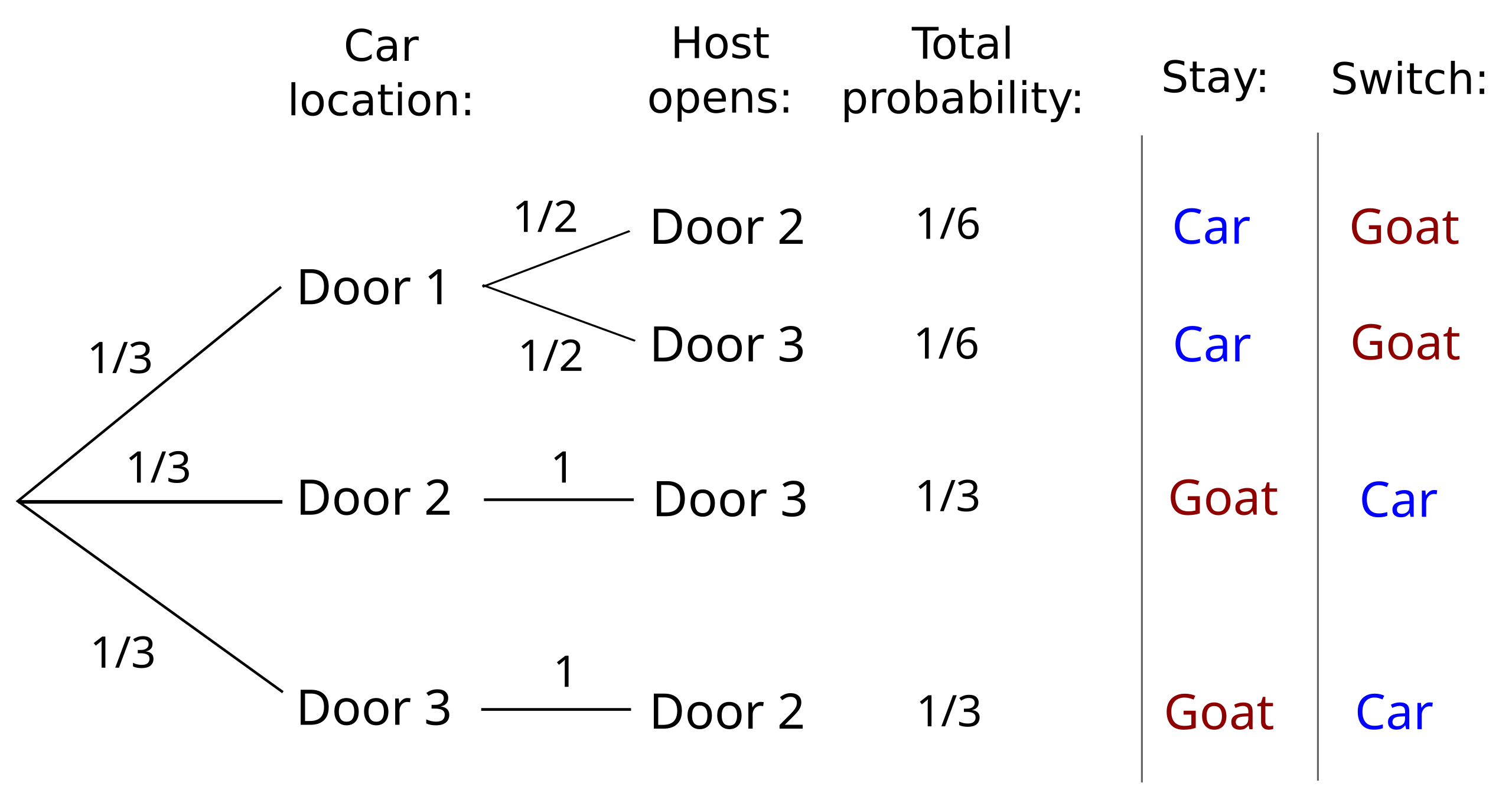
probability tree below which shows the Monty Hall game where the contestant always guesses the first door!
To reinforce your newfound intuition, let's try a simulation where you can choose the number of doors available. The graph will show the number of wins when using
the switch strategy and the stay strategy. Try playing around with the number of doors and see if you can find a pattern!
3
The graph above shows the winrate of the switch strategy as the number of doors increases. As you can see, the winrate of the switch strategy increases as the number
of doors increases. This is because the probability of choosing the correct door on the first try becomes almost impossible! Thus, when the host removes the rest of
the doors except for just two, the probability of winning by switching doors becomes huge! The below graph shows the empirical winrate of the switch strategy and
stay strategy as the number of doors increases to show that the probability of winning does increase as the number of doors increases.
Real World Application
Although the Monty Hall problem may seem as if it is some theoretical probability puzzle, it actually
has many practical real-world applications. In a sense, any decision-making scenario where you acquire some
new knowledge about your situation can be similar to a Monty Hall problem. The key to identifying these
situations is recognizing when your original decision is more likely to be more wrong than right due to you
gaining some more insight about the possible outcomes.
Example 1: D-Day Defense
During WW2, the risk of an imminent Allied invasion forced Germany to make a decision on how defenses should
be allocated. It was believed that an attack on Pas De Calais, France would be most likely due to an intentionally
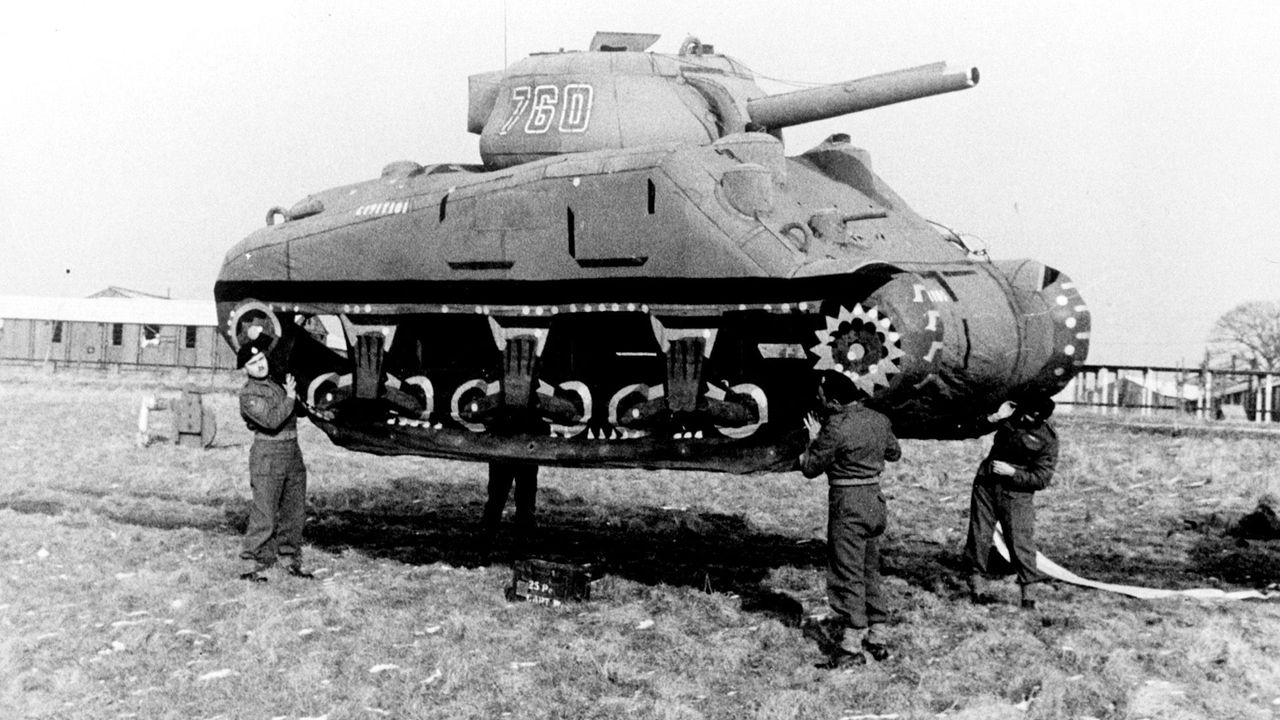
planned deception by the Allies also known as Operation Fortitude. This deception involved the creation of a fake
army presence, fake inflatable tanks, and fake radio chatter. Due to this deception, Germany had chosen to allocate
much of its resources in defending Pas De Calais. During the initial invasion of Normandy, it was believed the
landing was a feint and that the main invasion would still occur at Pas De Calais. Ultimately, this was a
strategic oversight in which the main invasion actually occured at Normandy.
In this scenario, Germany had chosen a door originally, which was to defend Pas De Calais. Given new information about
an invasion in Normandy, there is an opportunity to switch doors and reinforce Normandy. Yet due to hesitation that
the original decision to hold Pas De Calais was correct, German control of Normandy would ultimately be lost.
Example 2: Challenger Disaster
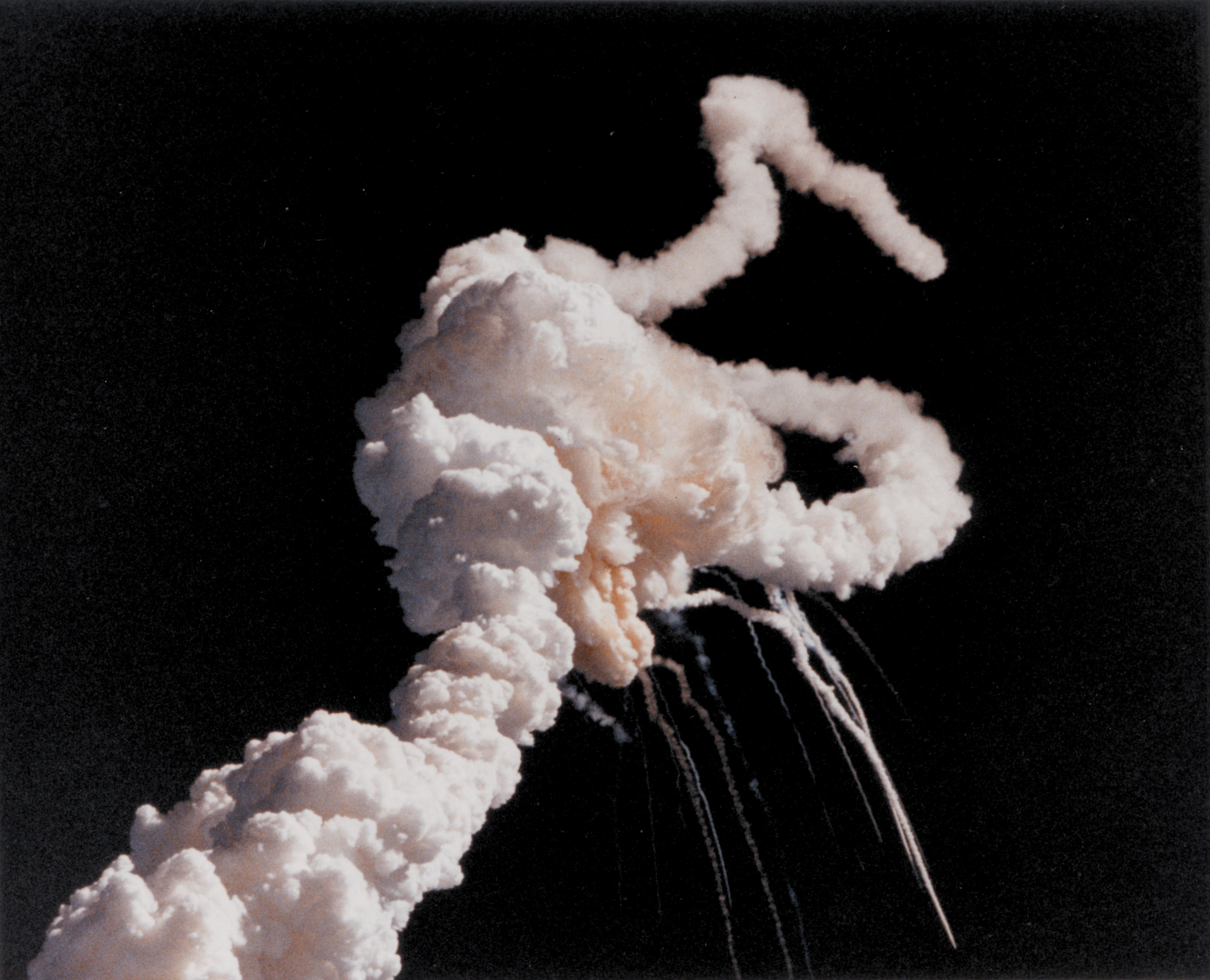
The 1986 Challenger Disaster resulting in the deaths of 7 crew members was caused by the failiure of O-ring seals
induced by extremely cold weather conditions. NASA had been informed before launch about the potential failiure
within the O-ring seals, yet these warnings were ultimately ignored. Some of the main reasons these warnings were
ignored was due to a pressure to stick to the original schedule, as well as an incorrect risk analysis of possible
outcomes given the O-ring seals did fail.
In this scenario, NASA had chosen a door originally, which was to launch at a set date. Given new information about
potential failiure in the O-ring seals, there is an opportunity to switch doors and delay launch. Yet due to pressure
of sticking to schedule and incorrect risk assessment, NASA had chosen to stick to the original door and launch anyway.